
Which Pet Is Right For Your Empire, CA Home?
Pocket pets are popular for families seeking smaller animal companions. They are very popular as first pets for kids, and with good reason: they are small, cute, and inexpensive, and are great for teaching children about empathy and responsibility. However, these small creatures require just as much thoughtful care and attention as larger pets.
At Empire Veterinary Clinic, serving Empire, CA and Modesto, CA, we understand that welcoming a pocket pet into your family is an exciting and meaningful decision. Whether you’re considering a hamster, gerbil, guinea pig, or mouse, each species has unique needs, personalities, and care requirements. As your friendly neighborhood veterinarians here in Empire, CA, we’re here to help you make an informed choice to keep your tiny new friend healthy, comfortable, and well-loved.
Best Small Pets for Kids: An Overview
Hamsters
Personality: Hamsters are generally solitary creatures who prefer living alone, especially Syrian hamsters, which are the most popular type. They’re nocturnal, meaning they’re most active at night – so don’t be surprised if your tiny pal wakes up to run in her wheel just as your household is winding down.
Size & Lifespan: Syrian hamsters grow to about 6 inches long and live 2–3 years, while dwarf hamsters are smaller, reaching only 2–4 inches and living up to 2 years.
Care Needs:
You’ll need to provide food and water daily, and spot clean the cage to remove waste and uneaten food. Aside from that, hamsters are very easy keepers.
- Clean cage weekly to control odor and prevent respiratory illness
- Provide an exercise wheel, tunnels, and chew toys to keep her physically and mentally stimulated
- Handle Hammie gently and avoid startling him, as sudden handling can result in defensive bites
Fun Fact: Hamsters have poor eyesight and rely heavily on their whiskers and sense of smell to navigate their environment. And while Hammie is colorblind, he really doesn’t see in black and white. Hamsters only see colours on the green spectrum. They’re also very near-sighted. This is important because you’ll have to make sure your pet doesn’t walk off a table.
Learn more about hamster care at the Animal Humane Society website here.
Gerbils
Personality: Gerbils are highly social animals and thrive in same-sex pairs or small groups. They are diurnal, meaning they’re active during the day, which makes them enjoyable for children and families to watch and interact with.
Size & Lifespan: Gerbils average about 4 inches in body length with an additional 4-inch tail. They live approximately 3–4 years.
Care Needs:
- Need a spacious tank with deep bedding for digging tunnels, which is natural gerbil behavior
- Enjoy gnawing on cardboard tubes, wooden toys, and chew blocks to keep their teeth worn down
- Rarely bite when socialized from a young age and handled gently
Spruce Pets has a helpful article on gerbil care here.
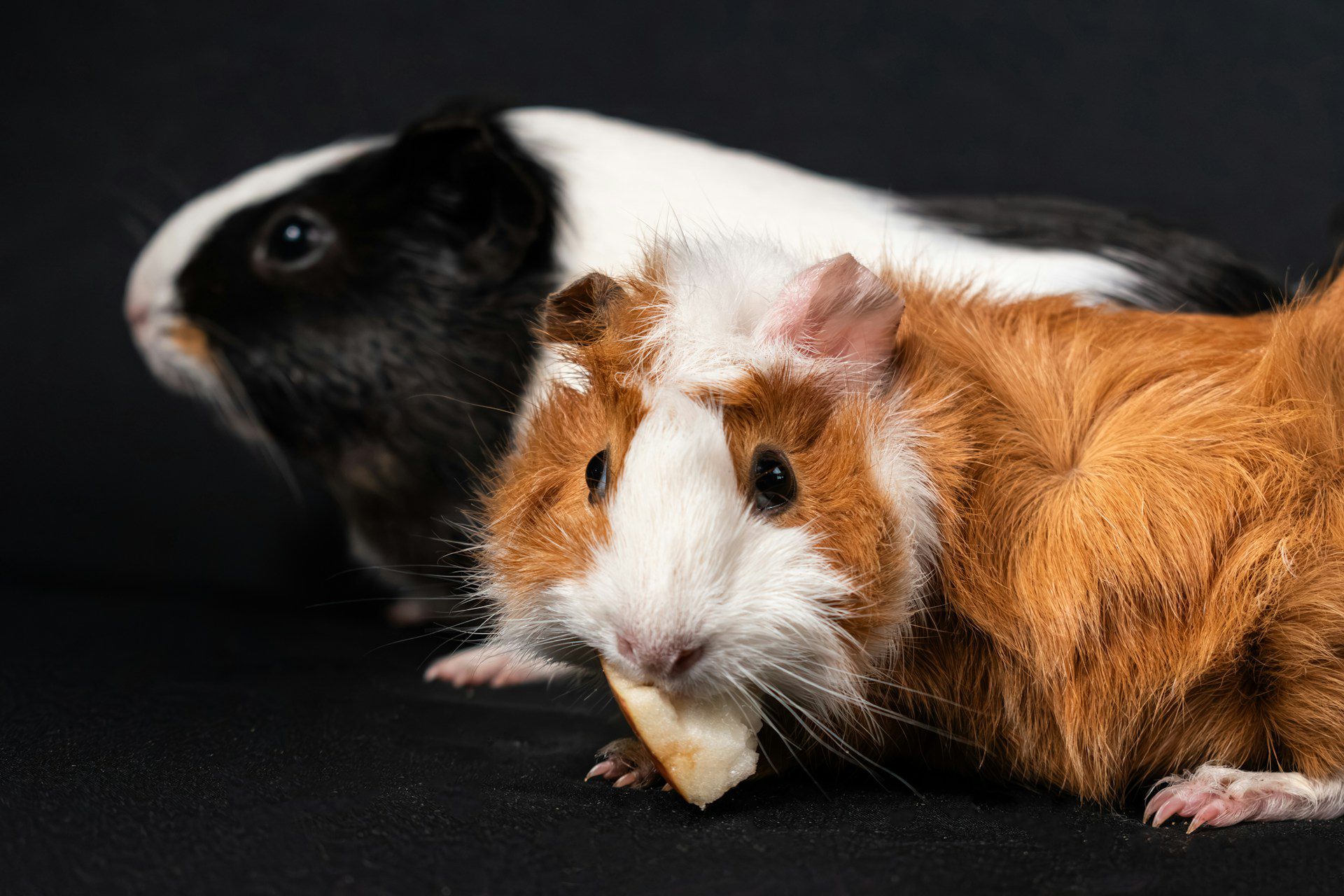
Guinea Pigs
Personality: Guinea pigs, also known as cavies, are gentle, vocal, and highly social. They thrive on companionship from other guinea pigs and often squeak with excitement when they hear you approach with food or treats. They’re a bit more charismatic than hamsters and gerbils, and can even learn tricks.
Size & Lifespan: Larger than other pocket pets, guinea pigs reach 8–12 inches in length and live around 5–7 years, though some can reach 8 years with excellent care.
Care Needs:
- Require a spacious cage with solid flooring to prevent foot injuries
- Need vitamin C supplementation, either through fresh vegetables or fortified pellets, as they cannot produce it themselves and will develop scurvy if deficient.
- Regular grooming for long-haired breeds to prevent matting
Helpful Fact: Guinea pigs’ teeth grow continuously, so unlimited hay and lots of safe chew toys are essential. Chewing on hard fibers will wear your pet’s teeth down and keep their digestive system healthy.
You can read more about Guinea pig care at the Royal Society for the Prevention of Cruelty to Animals (RSPCA) website here.
Mice
Personality: Mice are inquisitive, intelligent, and quick-moving. They can be kept alone, but females often do well in same-sex groups. Males tend to fight if housed together, so it’s best to keep them solo.
Size & Lifespan: Mice are the smallest of these pets, at about 3 inches long, and live 1–2 years on average.
Care Needs:
- Need secure cages with narrow bar spacing to prevent escapes
- Love tunnels, exercise wheels, and chew toys to keep them entertained
- Cages require frequent cleaning, as mice can develop respiratory issues if exposed to ammonia buildup
Fun Fact: Mice are remarkably clean and groom themselves frequently throughout the day.
Hamster vs Gerbil vs Guinea Pig: Which is Best?
When choosing a pocket pet, it’s important to consider each species’ social needs, active times, handling requirements, and suitability for your household. Hamsters are solitary creatures who prefer to live alone. They are nocturnal, meaning they’re active at night, and while they can be sweet when handled gently, they may bite if startled or woken suddenly. Hamsters are often best suited for older children or adults who are night owls and can respect their sleep schedule.
Gerbils, on the other hand, are highly social and thrive when kept in same-sex pairs or small groups. They are diurnal, so are active during the day when families are awake and able to interact with them. Gerbils are generally gentle if socialized from a young age, making them ideal for families wanting an interactive, daytime pocket pet.
Guinea pigs are also very social and should ideally be kept in pairs for companionship. They are diurnal, active during the day, and known for their very gentle nature. Because of their larger size and calm temperament, guinea pigs are well-suited for children, as long as an adult supervises handling to ensure safety for both child and pet.
Finally, mice can be social or solitary depending on gender. Female mice often do well in same-sex groups, while males are best kept alone to avoid fighting. Mice are nocturnal and are quick and agile, which can make handling a challenge. They are generally best for older children or adults who are comfortable with their speed and delicate size.
Caring for Pocket Pets: Key Tips
Daily Health Checks
Observe your furry friend each day for changes in appetite, droppings, coat condition, or breathing. Pocket pets hide illnesses until they are very sick, so early detection is critical. Click here to read our blog on recognizing signs of illness in pets.
Clean Environment
Spot-clean cages daily to remove soiled bedding and do a full clean weekly. Clean habitats help prevent respiratory infections, skin issues, and unpleasant odors.
Safe and Gentle Handling
Always supervise children when handling pocket pets. These small animals can be easily injured by rough handling or drops.
Provide Enrichment
Regardless of species, pocket pets need mental stimulation:
- Hamsters and mice: Exercise wheels, tunnels, and chew toys
- Gerbils: Digging boxes and cardboard tubes
- Guinea pigs: Hidey houses, tunnels, and floor time in a safe enclosed area
Helpful Fact: Gerbils can jump up to 12 inches high, so their enclosures need secure lids to prevent unexpected escapes!
Veterinary Care for Pocket Pets
At Empire Veterinary Clinic, we provide wellness exams for pocket pets to assess their teeth, weight, skin, and overall health. Although many people consider them low-maintenance, these animals benefit from veterinary care to catch health issues early.
If you notice warning signs, such as weight loss, diarrhea, lethargy, or breathing difficulty, call our vet clinic immediately.
FAQ
Which pocket pet is best for a young child?
Guinea pigs are often recommended because of their gentle temperament, larger size, and ease of handling under adult supervision. However, hamsters, mice, and gerbils are also good options. Do plenty of research on each, and ask your vet for advice.
Do pocket pets need vaccines?
Most pocket pets do not require routine vaccinations, but they should still see a veterinarian for wellness exams and if they show signs of illness.
Can pocket pets live together?
Hamsters and mice often prefer solitary housing (especially males). Guinea pigs, on the other hand, are happier with roommates. Ask your vet for advice.
How often should I clean a pocket pet’s cage?
Spot-clean daily and perform a full clean with bedding change at least once per week to maintain hygiene and reduce odor. You’ll also want to do a deep clean about once a month.
Schedule an Appointment at Our Empire, CA Veterinary Clinic
Are you looking for a great veterinary clinic in Empire, CA? You can try searching for a vet near me, or simply call Empire Veterinary Clinic. Choosing a pocket pet is an exciting journey, and ensuring your hamster, gerbil, guinea pig, or mouse receives proper care will keep her happy and healthy for years to come. Visit our Service Page here to learn more about the services we offer and the type of pets we see. Schedule an appointment with us today to keep your furry bestie thriving!
This blog is meant to be informational only. Always consult with your veterinarian for personalized medical advice and follow their recommendations for your pet’s health and well-being.